


Environmental Licensing in Saudi Arabia is a fundamental step to ensure the compliance of industrial, commercial, and service facilities with approved environmental regulations and standards. It is not merely an administrative procedure, but an integrated regulatory system that enhances environmental protection and limits environmental violations through the application of environmental standards and the executive regulations of the environmental system supervised by the competent authorities.
Through the Sustainable Resources Office, we provide integrated solutions and specialized consulting services to help facilities achieve full in Saudi Arabia is a fundamental step to ensure the compliance of industrial, commercial, and service , starting from how to obtain an environmental license to preparing the environmental record and environmental remediation plans, while conducting the necessary environmental measurements according to Saudi standards. Our goal is to ensure compliant and sustainable operation for our clients that aligns with Saudi Vision 2030 in protecting the environment and promoting sustainability.
Contact us to learn all the details about environmental licensing and to assist you in obtaining it and completing all required procedures, or call us at +966590721313. The office is accredited by the National Center for Environmental Compliance (NCEC), Human Resources and Social Development, and the Ministry of Commerce to provide specialized services in the field of environment and sustainability.
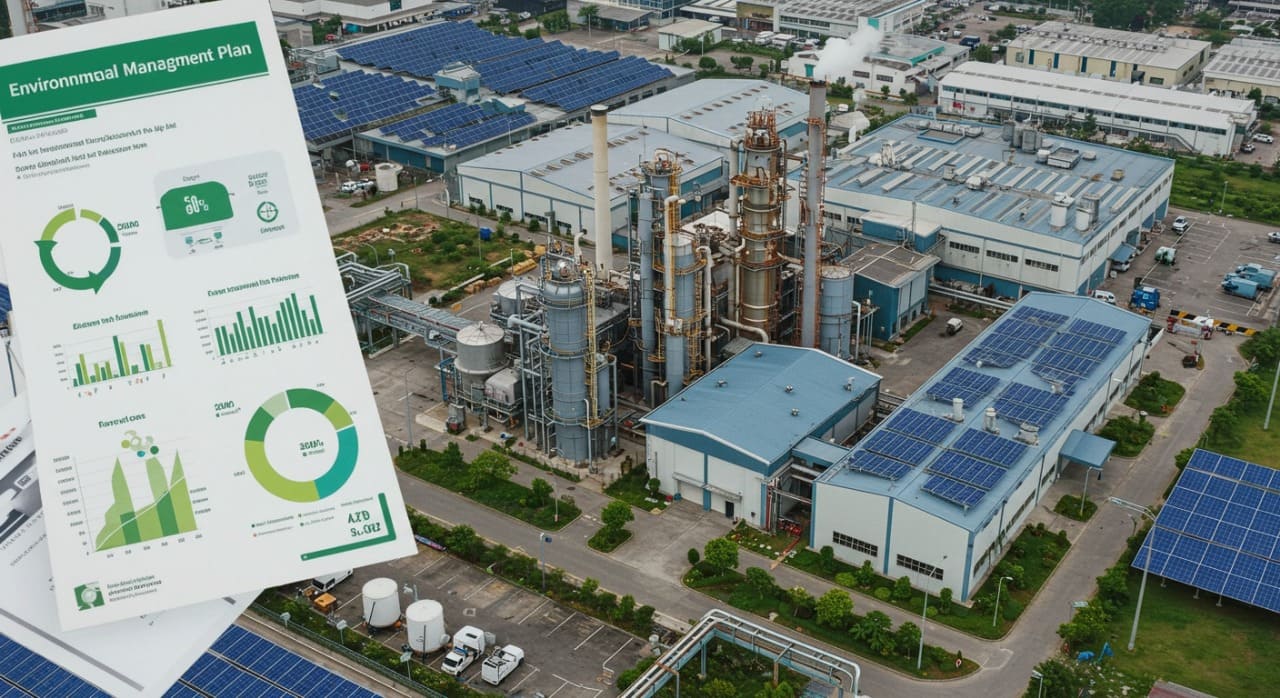
What is an Environmental Licensing ?
An Environmental Licensing is defined as an official document issued by the competent authorities in the Kingdom, granted to facilities that practice activities with a direct or indirect environmental impact. it proves their compliance with environmental requirements and their adherence to the approved environmental standards in Saudi Arabia. This license aims to ensure that all projects are managed according to the controls of the executive regulations of the environmental system and contribute to sustainable development without harming the surrounding ecosystem.
At the Sustainable Resources Office, we help our clients fulfill all technical and procedural requirements to obtain an environmental license, including preparing environmental measurements, remediation plans, and environmental records, to ensure operation according to the highest standards of quality and sustainability.
What is the difference between an Environmental Licensing and an Environmental Permit?
Although the two terms are related to the same goal of protecting the environment, there is a clear difference between an environmental license and an environmental permit in terms of timing and purpose:
- Environmental Licensing: Required before starting the project or activity, and granted based on an Environmental Impact Assessment (EIA) study to ensure that the project is environmentally safe before implementation.
- Environmental License: Granted after the project is operational and all environmental requirements have been met. it serves as final approval confirming the facility’s commitment to environmental compliance standards and environmental criteria.
At the Sustainable Resources Office, we provide integrated services to support facilities in both stages, from the method of extracting an Environmental Licensing to obtaining a commercial environmental permit, ensuring full compliance with the executive regulations of the environmental system and avoiding any environmental compliance violations.
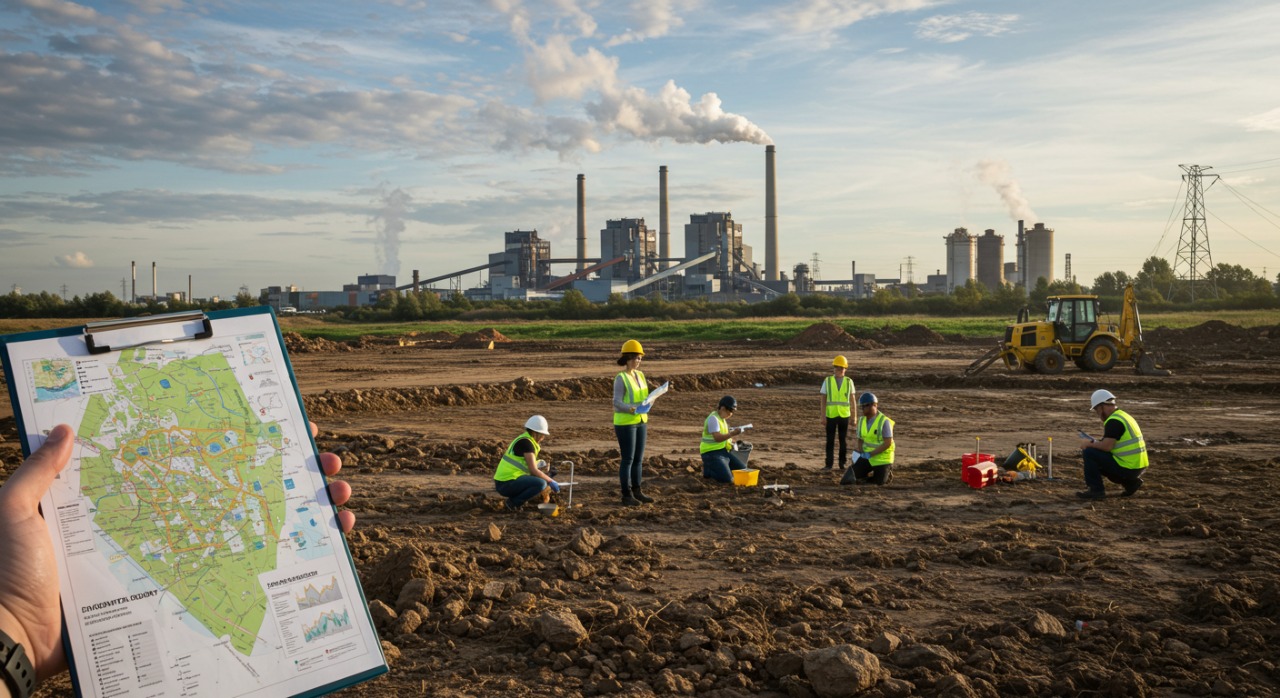
Who issues the Environmental Licensing in Saudi Arabia?
TheEnvironmental Licensing in Saudi Arabia is issued by the National Center for Environmental Compliance (NCEC), which is the official body authorized to oversee the granting of licenses for industrial, commercial, and service activities that may have an environmental impact.
The Center is responsible for evaluating the extent of facilities’ compliance with the requirements of the executive regulations of the environmental system and the approved environmental standards. Through its specialists, it conducts comprehensive technical and field reviews before issuing the license. The Center also coordinates its work with the Ministry of Environment, Water and Agriculture, the Royal Commission, and the Industrial Cities Authority (MODON) to ensure that licensed activities are consistent with environmental development and sustainability plans in the Kingdom.
Who needs anEnvironmental Licensing?
An Environmental Licensing in Saudi Arabia is required for all facilities or activities that may cause an environmental impact, whether industrial, service, or commercial. Its purpose is to ensure that all projects operate according to approved environmental standards and accurately apply environmental compliance systems. Activities that need an environmental license include:
- Environmental licensing for factories of various production and manufacturing types.
- Waste treatment centers, landfills, and recycling facilities.
- Chemical, medical, and health laboratories.
- Gas stations, petroleum tanks, and storage sites.
- Maintenance workshops, heavy equipment, and car washes.
- Major construction projects, desalination plants, and food factories.
Obtaining a license is a basic condition for practicing the activity, and it protects the facility from environmental compliance violations that may result from operating without a permit or an approved environmental license.
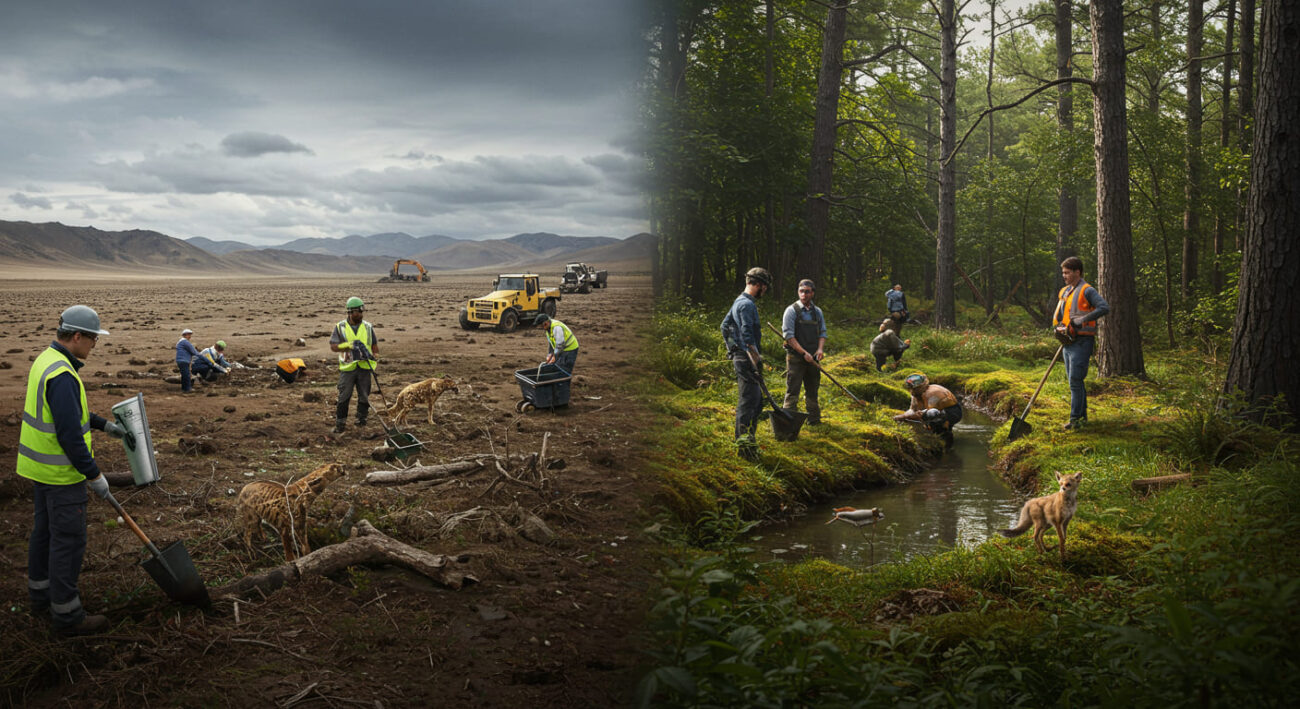
Purpose of the Environmental Licensing
The Environmental Licensing in Saudi Arabia aims to ensure that industrial, service, and commercial activities are managed in a way that preserves the environment and prevents pollution, in line with the executive regulations of the environmental system and national environmental standards. The license is considered an effective regulatory tool to measure the environmental commitment of facilities and ensure their implementation of sound practices. The main objectives of the environmental license are:
- Ensuring that facilities comply with all environmental requirements regulating their activities.
- Reducing potential environmental damages and risks resulting from operation.
- Promoting environmental sustainability in accordance with Saudi Vision 2030.
- Documenting the performance of facilities in implementing environmental remediation plans and periodic environmental measurements.
- Protecting natural resources and society from any negative impacts of production or operational activities.
Requirements for Obtaining an Environmental Licensing
To obtain an Environmental Licensing in Saudi Arabia, facilities must meet a set of technical and procedural requirements that ensure full compliance with the executive regulations of the environmental system and approved environmental standards. These requirements aim to document the facility’s environmental status and the extent of its application of environmental compliance and sustainability principles. Key basic requirements include:
- A copy of the previous environmental permit or approval of the environmental impact study for the project.
- Submitting a report on the current environmental status of the facility.
- Preparing and implementing an operational environmental management plan and environmental remediation plans for the site.
- Results of environmental measurements (air, water, soil, noise) according to Saudi standards.
- Preparing an environmental emergency plan to deal with any potential leaks or accidents.
- Updated data on chemicals and waste resulting from the activity.
- Existence of an integrated environmental record documenting environmental activities and dates of inspections and reports.
Compliance with these requirements is an essential step to avoid environmental compliance violations and ensure the continuation of the activity legally and sustainably.
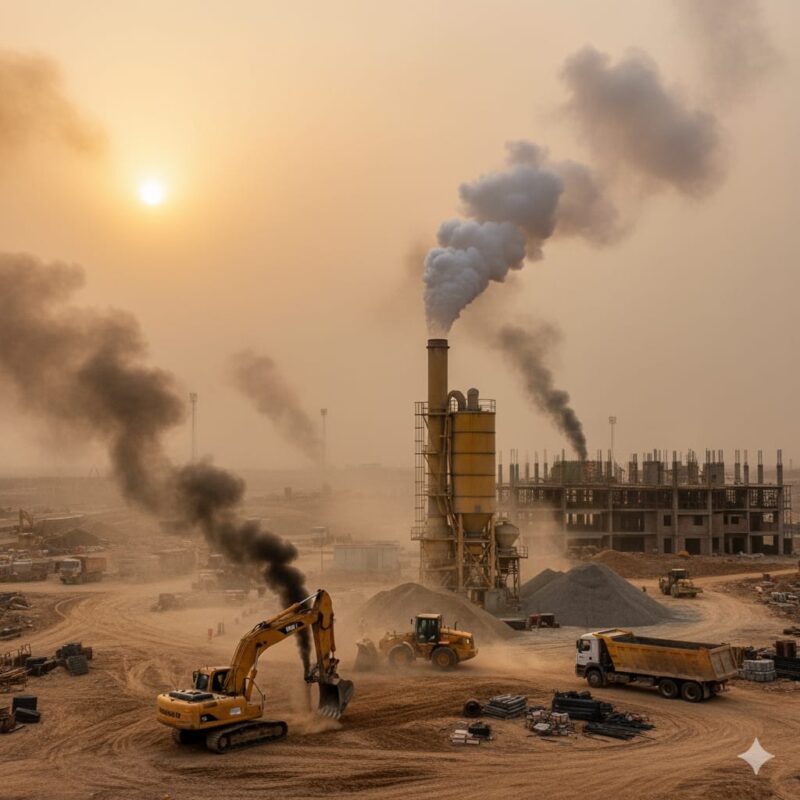
Steps to Obtain an Environmental License in Saudi Arabia
The procedures for obtaining an environmental license in Saudi Arabia include a set of organized steps supervised by the National Center for Environmental Compliance (NCEC) to ensure that facilities meet all requirements. The main steps are:
- Registering the facility electronically via the NCEC platform.
- Filling out the application and attaching required documents such as technical reports and environmental measurement results.
- Initial technical review by specialists to ensure data completeness and accuracy.
- Field inspection visit to evaluate the extent of the facility’s application of environmental compliance requirements on the ground.
- Evaluating results and notes and reviewing the environmental record and management plans.
- Issuing the final environmental license after fulfilling all legal conditions and requirements.
Validity Period of the Environmental License and Renewal Mechanism
The validity period of an environmental license in Saudi Arabia is usually three years from its issuance date, as determined by the executive regulations. Environmental license renewal is an essential step to ensure the continuation of the facility’s activity legally. The renewal mechanism includes:
- Submitting the electronic renewal application via the NCEC platform before the license expires by a sufficient period.
- Attaching the periodic environmental performance report showing the results of environmental measurements.
- Conducting a field inspection visit to ensure continued compliance with operational and remediation plans.
- Paying the statutory renewal fees according to the activity classification.
- Issuing the renewed license after fulfilling all requirements.
In some cases, renewing Category 1 or Category 2 environmental permits is required depending on the nature of the activity.

Reasons for Rejection or Withdrawal of an Environmental License
Issuance of an environmental license can be rejected, or an issued license withdrawn, in any of the following cases:
- Submitting incorrect data or documents or attempting to manipulate environmental information.
- Repeated environmental violations despite previous warnings, including violations listed in environmental compliance violations.
- Failure to adhere to environmental remediation plans or the facility’s failure to implement waste management and safe disposal of environmental residues.
- Causing serious damage to the environment, such as dangerous pollution of air, water, or soil.
- Operating the project without a prior license or environmental permit, placing the facility outside the legal environmental system.
Is the Environmental License limited to large projects?
No, the environmental license is not limited to large projects only; it includes any activity with an environmental impact, whether small or medium, such as:
- Maintenance or welding workshops.
- Car washes or vehicle cleaning shops.
- Shops selling chemicals or paints.
- Small labs or food workshops.
Importance of Having a Certified Environmental Consulting Body
Having a certified environmental consulting body is a crucial step to ensure the success of any facility in obtaining an environmental license. These bodies help prepare technical documents, conduct accurate environmental measurements, and prepare reliable environmental sustainability reports, facilitating interaction with official authorities.
In this context, the Sustainable Resources Office is considered a prominent environmental services office in Saudi Arabia, offering extensive experience in how to obtain an environmental license, ensuring your facility complies with environmental regulations efficiently and professionally.
Facility Obligations After Obtaining the Environmental License
After obtaining the license, the facility has several basic obligations to ensure continued compliance, including:
- Adherence to and accurate implementation of prescribed environmental remediation plans.
- Conducting regular environmental measurements for air, water, soil, and noise.
- Safe handling of waste, emissions, and industrial process products.
- Training workers on environmental procedures and emergencies within the facility.
- Keeping the environmental record updated and ready for periodic inspection.
- Submitting periodic environmental sustainability reports to the NCEC.

Frequently Asked Questions about Environmental Licensing
Who needs an environmental license?
Every facility practicing an activity that may affect the environment, including factories, waste treatment centers, gas stations, car and equipment maintenance workshops, major construction projects, and desalination plants. Any activity with an environmental impact, large or small, requires an environmental license to ensure compliance with environmental regulations.
What is the purpose of the environmental license?
The environmental license ensures the facility’s commitment to environmental standards and regulations, reduces environmental risks, protects society and the environment, and documents the extent of commitment to sustainability and Saudi standards. It also helps in monitoring environmental measurements and raising the quality of environmental sustainability reports.
How do I get an environmental permit?
Obtain an environmental permit by registering on the NCEC platform, submitting required documents, and conducting an Environmental Impact Assessment (EIA) study. After review and data approval, the environmental permit allowing the project to start according to environmental requirements is issued.
How much are the environmental permit fees?
Fees are determined according to the type of activity and its environmental classification, and are paid electronically via the NCEC platform. Additionally, the facility may incur fees from environmental consulting bodies when preparing remediation plans and measurements necessary for issuing the permit.
For more services we provide at the Sustainable Resources Office in the environmental field:
Renewing Category 1 and 2 environmental permits for facilities, companies, and factories
Assessing the existing environmental situation for your organization in Saudi Arabia