


The Operational Environmental Management Plan (OEMP) has become one of the core requirements today for any industrial or operational facility seeking environmental compliance and the enhancement of sustainability practices within its daily operations. It serves as the pivotal document that ensures the integration of environmental considerations into all operational activities, from waste management and emission control to resource rationalization and environmental risk reduction. By preparing a well-designed and thoroughly studied plan, facilities can achieve a balance between operational efficiency and environmental protection.
At the Sustainable Resources Office for Environmental Consulting, accredited in Saudi Arabia, we provide the service of preparing an Operational Environmental Management Plan (OEMP) according to the latest national and international standards. Our services align with the requirements of the National Center for Environmental Compliance (NCEC), helping you meet regulatory requirements efficiently and achieve sustainability as a true competitive advantage.
Contact us now for a free consultation to obtain an Operational Environmental Management Plan (OEMP) from the Sustainable Resources Office for Environmental Consulting, accredited in Saudi Arabia.
What is an Operational Environmental Management Plan (OEMP)?
An Operational Environmental Management Plan (OEMP) is an organizational and strategic document aimed at managing the environmental impacts resulting from the operation of facilities and projects in a systematic and organized manner. It is considered one of the most important tools for improving environmental performance and ensuring sustainable environmental compliance. This plan includes a set of policies and procedures that clearly define responsibilities and authorities, mechanisms for identifying environmental impacts, and the necessary preventive and mitigation measures to limit them, while adopting an effective monitoring approach that includes defining environmental performance indicators and monitoring and evaluation procedures.
The Operational Environmental Management Plan also focuses on establishing precise systems for emergency response and training employees to face potential environmental scenarios in accordance with relevant laws and legislation. By professionally designing this plan, facilities can achieve environmental protection and full compliance with regulatory requirements, while fostering a culture of environmental responsibility within the work environment.
What is the Goal of the Operational Environmental Management Plan?
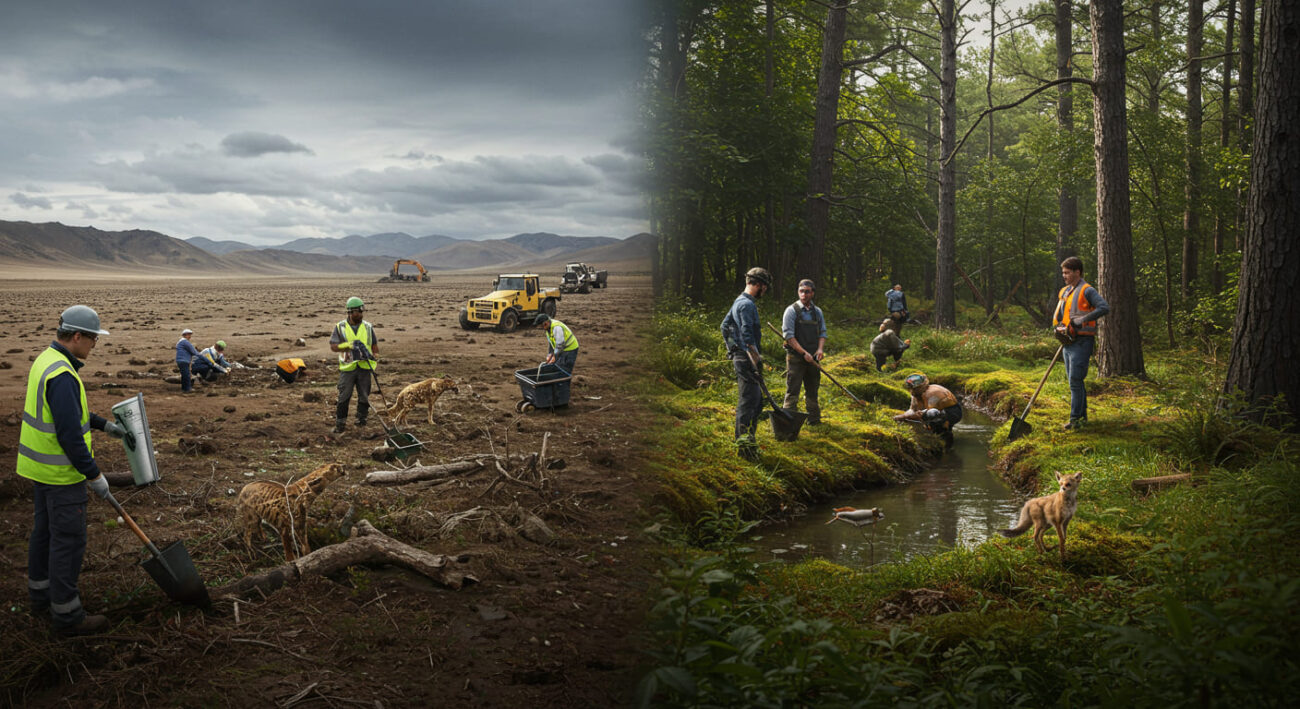
The goal of environmental management is to achieve a balance between economic development and environmental preservation by implementing organized and effective methodologies that ensure the reduction of negative environmental impacts and the promotion of resource sustainability. The Operational Environmental Management Plan (OEMP) is one of the primary tools for achieving this goal, as it contributes to improving environmental performance, raising the efficiency of resource use, and complying with environmental regulatory requirements.
Environmental management goals also include comprehensive environmental protection by identifying environmental impacts resulting from operational activities and establishing necessary preventive and mitigation measures. This includes defining environmental performance indicators that allow for progress measurement and evaluation. Additionally, environmental management focuses on establishing emergency response procedures and defining monitoring and evaluation procedures in a way that ensures the highest levels of environmental compliance and transparency.
In the Kingdom of Saudi Arabia, several entities oversee the application of environmental management principles, most notably the National Center for Environmental Compliance (NCEC), which is the primary reference for issuing licenses and monitoring environmental compliance. Other key players include the Ministry of Commerce in regulating commercial activities to ensure sustainability, and the Ministry of Municipalities and Housing in monitoring the application of urban environmental standards. Furthermore, the Ministry of Human Resources and Social Development supports the development of an environmentally responsible work environment, while the Saudi Business Center facilitates environmental licensing procedures and the registration of operational management plans within business establishment procedures.
This integration between entities, combined with the application of the Operational Environmental Management Plan, represents a fundamental pillar in achieving Saudi Vision 2030 toward a clean environment and a sustainable economy.
What are the Types of Ecosystems?
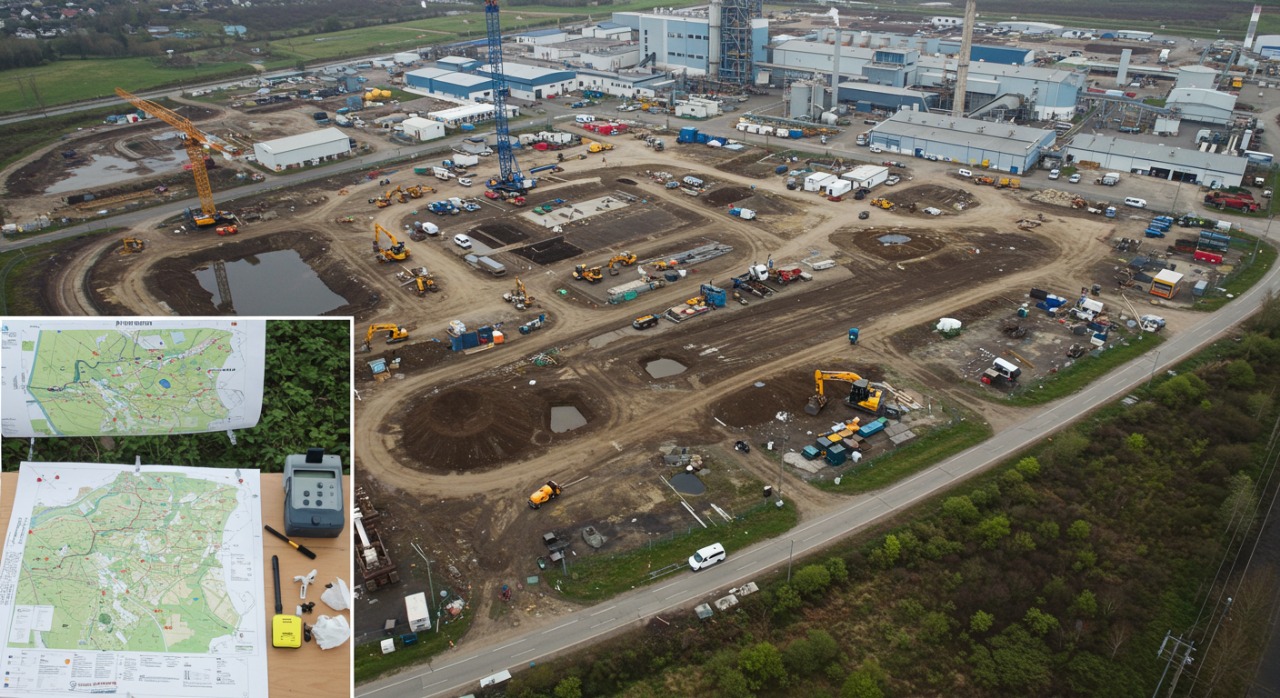
The Operational Environmental Management Plan (OEMP) is a central tool in regulating the relationship between human activities and environmental components. This necessitates a precise understanding of the types of ecosystems that this plan seeks to protect and balance. By identifying environmental impacts on various natural environments, the plan contributes to improving environmental performance and protection across different operational activities. Below are the most prominent types of ecosystems:
Terrestrial Ecosystem
Includes forests, deserts, grasslands, and mountains; it is characterized by high biodiversity and is directly affected by construction and industrial activities.
Freshwater Ecosystem
Includes rivers, lakes, and swamps; it is highly sensitive to pollution from industrial or agricultural drainage, requiring the definition of emergency response procedures.
Marine Ecosystem
Comprises oceans, seas, coral reefs, and estuaries. These environments are exposed to risks of oil spills and waste, necessitating continuous monitoring and evaluation procedures.
Urban Ecosystem
Formed by cities and densely populated urban areas; it is affected by factors such as noise, air pollution, and solid waste, requiring strict preventive and mitigation measures.
Agricultural Ecosystem
Affected by the use of fertilizers and pesticides; it calls for promoting sustainable agricultural practices within the context of environmental compliance.
Desert Ecosystem
Characterized by environmental fragility, requiring precise treatments during development projects located within its scope.
Mountain Ecosystem
Requires special construction and excavation techniques to reduce erosion and landslides; this element is considered within the OEMP to ensure geological safety.

What is an Example of an Operational Environmental Management Plan (OEMP)?
An example of an environmental plan could be a project to establish a factory in a new industrial zone. This project requires preparing an Operational Environmental Management Plan (OEMP) to ensure environmental compliance and minimize the negative impact on the surrounding ecosystem.
The plan begins after defining the Construction Environmental Management Plan (CEMP), then by identifying potential environmental impacts, such as air pollution from industrial processes or water pollution from industrial wastewater. The plan then includes clear mechanisms for identifying preventive and mitigation measures, such as installing emission treatment systems, water treatment units before discharge, and designating areas for waste collection and recycling.
The plan also includes a clause for defining environmental performance indicators that are monitored periodically, such as pollutant levels in air and water, noise levels, and resource consumption. Added to this is the definition of emergency response procedures in case of a chemical leak or fire, as well as the identification of responsibilities and authorities to ensure the accurate implementation of all measures. In this way, the environmental plan transforms from a paper document into an effective operational practice that ensures the improvement of environmental performance and the protection of the natural surroundings.
What is the Corrective Action Plan (CAP) Model?
The Corrective Action Plan (CAP) model is a systematic document used to identify and address environmental problems or cases of environmental non-compliance at a specific site. Its goal is to correct non-compliant situations and achieve full environmental compliance within a clear timeframe and through specific procedures.
This model is usually used when environmental violations or breaches are discovered during environmental inspections or internal audits, such as pollution from a chemical leak, poor waste management, or the absence of emission control mechanisms. Preparing a CAP is an important part of the Operational Environmental Management Plan (OEMP), as it contributes to improving environmental performance and enhancing the trust of regulatory bodies like the National Center for Environmental Compliance (NCEC).
Objectives of the Corrective Action Plan (CAP) Model
- Accurately identify the source of the environmental problem.
- Establish effective and sustainable corrective measures.
- Set a timeline for implementation.
- Identify the parties responsible for implementation and follow-up.
- Monitor and measure progress through environmental performance indicators.
- Provide a clear emergency response plan related to the problem.
The CAP model is a necessary tool in the path of any industrial or construction facility looking for full environmental compliance, especially in projects supervised by regulatory bodies such as the Ministry of Environment, Water and Agriculture and the Saudi Business Center.
What are the six basic objectives of an Environmental Management System?
The six basic objectives of an Environmental Management System (EMS) are to establish a systematic framework for improving environmental performance and reducing the negative environmental impact of facility activities. They are the pillars of any effective Operational Environmental Management Plan and align with international standards like ISO 14001 and requirements of regulatory bodies like the NCEC.
1. Environmental Compliance.
2. Pollution Prevention.
3. Continuous Improvement.
4. Environmental Emergency Response.
5. Employee Engagement and Awareness.
6. Identification and Monitoring of Environmental Impacts.
These objectives contribute to enhancing environmental protection, achieving sustainable development, and raising the efficiency of facilities in Saudi Arabia and the region within an integrated OEMP framework. Our office also provides rehabilitation plans for degraded sites.