


Environmental Measurements represent the fundamental pillar for protecting the environment and ensuring the sustainability of natural resources. They are the tool that allows understanding changes in air, water, and soil, and accurately monitoring pollutant levels.
At the Sustainable Resources Office (SREC), we adopt the latest measurement and analysis technologies to provide integrated environmental solutions that help companies comply with the Environmental Measurement Law and effectively improve their environmental performance. These measurements are not just a technical procedure, but a vital step toward a healthy environment and a more sustainable future.
Contact us to learn all the details from the Sustainable Resources Environmental Consultancy Office, accredited in Saudi Arabia, or call us at +966590721313. The office is accredited by the National Center for Environmental Compliance (NCEC), the Ministry of Human Resources and Social Development, and the Ministry of Commerce to provide specialized services in the field of environment and sustainability.

What are Environmental Measurements?
Environmental measurements are the scientific process through which accurate data is collected and analyzed regarding environmental components such as air, water, soil, and living organisms. The goal is to evaluate the environmental status and understand the extent of human and natural impacts on it. These measurements represent the foundation of any plan aimed at environmental compliance or achieving sustainable development, as their results are used to identify pollution sources and develop appropriate solutions to mitigate them.
Environmental measurements cover several key areas:
- Air Quality: Measuring the concentration of gases and particles such as carbon dioxide, nitrogen oxides, and suspended dust.
- Water Quality: Analyzing surface water, groundwater, and wastewater to determine chemical and biological pollutant ratios.
- Soil Characteristics: Examining heavy metal content, salinity, and acidity to assess fertility and environmental safety.
- Noise, Vibrations, and Radiation: Measuring ambient levels to ensure compliance with international standards.
- Biological Indicators: Monitoring plants and living organisms as indicators of pollution or environmental change.
These measurements are executed using advanced sensors and fixed or mobile monitoring stations, in addition to precise laboratory analyses. Environmental measurement companies are committed to applying standards such as ISO 14000 and the standards of the National Center for Environmental Compliance (NCEC) in Saudi Arabia to ensure the quality and accuracy of results.
Environmental measurements are a pivotal step in both environmental audit studies and sustainability reporting processes, helping organizations improve their environmental performance, reduce emissions, and obtain necessary certifications such as Occupational Health and Safety Certification or qualification for environmental permits for engineering projects.
Why Environmental Measurements are Important
Environmental measurements are the cornerstone of protecting the environment, ensuring human health, and resource sustainability. They are not just about data collection, but a strategic means that helps governments, industrial facilities, and environmental measurement companies make decisions based on scientific facts. By adhering to the Environmental Measurement Law and national and international standards, a true balance can be achieved between economic development and environmental preservation. The importance of these measurements is evident in the following points:
- Public Health Protection: Environmental measurements enable the monitoring of pollutants in air, water, and soil before they affect humans, contributing to the reduction of respiratory, skin, and chronic diseases.
- Biodiversity Preservation: By tracking environmental changes in natural systems, soil, and water, measurements help protect living organisms from degradation or extinction.
- Support for Environmental Legislation and Policies: Measurements provide reliable data that competent authorities rely on to implement regulations and issue environmental permits for industrial and engineering projects.
- Planning for Sustainable Development: Environmental data represents the primary input in preparing studies such as environmental audits for Category II projects and environmental impact assessments before implementing major projects.
- Improving Institutional Environmental Performance: Measurements help identify weaknesses and excess emissions, enabling companies to develop corrective plans and prepare sustainability reports more effectively.
- Enhancing Social Responsibility and Transparency: Companies committed to periodic environmental measurements build trust with the community and demonstrate their commitment to environmental protection.
- Monitoring and Adapting to Climate Change: By analyzing long-term trends in temperatures and pollution ratios, plans can be developed to reduce climate impacts and achieve compliance with Carbon Footprint Reporting requirements.
In short, environmental measurements are not just a legal requirement, but a strategic necessity for every entity aspiring to environmental compliance and long-term sustainable development.
International and National Standards for Environmental Measurements
Environmental measurements are based on a set of international and national standards that ensure their accuracy and reliability. Key standards include:
- ISO 14000: Environmental management standards to improve performance and reduce pollution.
- ISO 14001: An environmental management system that helps organizations with legislative compliance and continuous improvement.
- ISO 14031: For environmental performance evaluation and measuring the efficiency of environmental activities.
- ISO 14064: Specifically for monitoring and managing greenhouse gas emissions.
- Internationally approved air, water, and soil quality standards such as WHO and EPA.
- National standards issued by the National Center for Environmental Compliance (NCEC) in Saudi Arabia to regulate emissions and air/water quality.
- Regulations and laws of the Environmental Measurement Law that define pollutant limits and monitoring procedures.
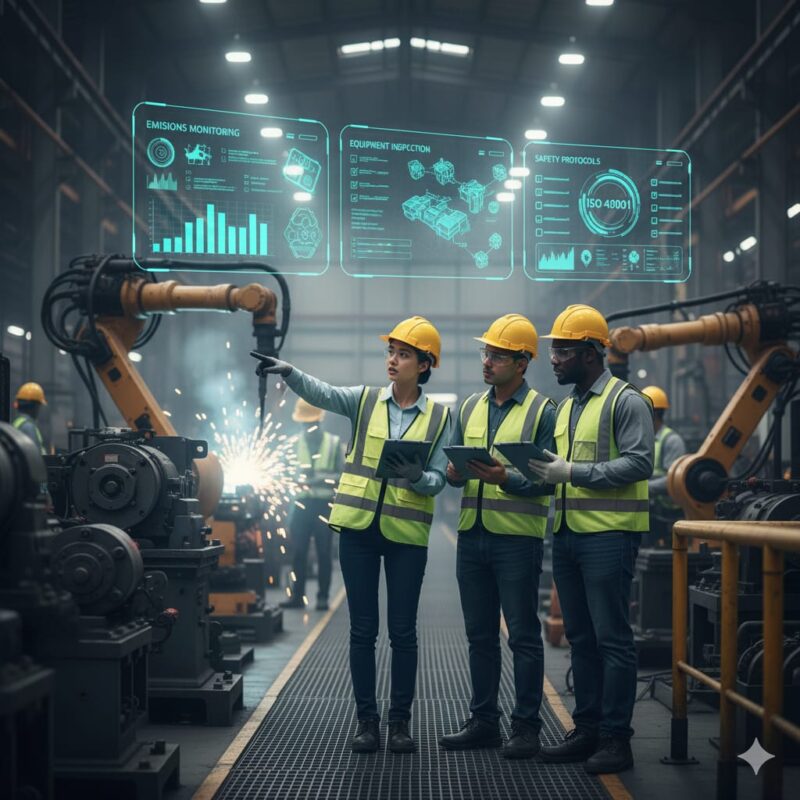
Tools and Technologies for Environmental Measurements
Environmental measurements rely on a set of advanced tools and technologies that ensure accurate data collection and analysis according to Environmental Measurement Law standards, helping agencies and environmental measurement companies evaluate environmental performance. Key tools and technologies include:
- Air Measurement Devices: To measure polluting gases such as CO₂, NOₓ, SO₂ and fine particulate matter (PM2.5 – PM10).
- Water Analysis Devices: To determine the quality of surface water, groundwater, and wastewater and their compliance with environmental standards.
- Soil Measurement Devices: For detecting salinity, acidity, and heavy metal ratios or agricultural pollutants.
- Noise and Vibration Devices: To measure nuisance levels in residential and industrial areas and ensure compliance with standards for obtaining an Environmental Permit.
- Specialized Analytical Laboratories: For conducting chemical and biological tests on environmental samples and ensuring result accuracy.
- Fixed and Mobile Monitoring Stations: To follow environmental changes in real-time and cover different areas.
- Quality Assurance/Quality Control (QA/QC) Systems: To ensure the accuracy of devices and analyses according to international standards.
- Data Analysis and Pollution Modeling Software: To interpret results and prepare necessary reports such as sustainability reports or environmental audit studies for Category III projects.
Operational Steps for Conducting Environmental Measurements
Environmental measurements are carried out according to organized steps that ensure result accuracy and reliability, in compliance with Environmental Measurement Law requirements and national/international standards. These steps include:
- Defining the Goal and Scope: Clarifying the purpose of the measurement and the scope of the environmental study.
- Measurement Program Design: Determining required environmental standards, locations, and appropriate measurement times.
- Field Sample Collection: Using accredited measuring devices to ensure data quality.
- Transporting Samples to the Lab: For specialized chemical or biological analysis.
- Calibration and Quality Assurance: Ensuring device and result accuracy before accreditation.
- Data Analysis and Interpretation: Comparing results with approved environmental limits and standards.
- Preparing Final Reports: Presenting results and technical recommendations in official reports such as the environmental audit study.
- Continuous Review and Follow-up: To evaluate environmental changes over time and improve performance.
These steps ensure that environmental measurements are an effective tool for assessing environmental impact and promoting sustainability across various sectors.
Why Choose the Sustainable Resources Office for Environmental Measurement Services?
The Sustainable Resources Office is among the leading entities specialized in providing environmental measurement services according to the highest international and national standards. The office is distinguished by a team of qualified experts and the latest field and laboratory technologies that ensure accurate and reliable results.
We are committed to applying the requirements of the Environmental Measurement Law and the standards of the National Center for Environmental Compliance (NCEC) in Saudi Arabia, ensuring our clients full compliance with legislation and the achievement of the highest levels of environmental performance.
We also provide integrated solutions including preparing sustainability reports, conducting environmental audit studies for Category II and III projects, in addition to qualifying companies to obtain environmental certifications and Occupational Health and Safety certification, with full transparency in procedures and prices.
By choosing the Sustainable Resources Office, you ensure a reliable partner that merges science, experience, and technology to serve a cleaner and more sustainable environment.

Frequently Asked Questions
What is Environmental Measurement?
Environmental measurement is the process of collecting and analyzing accurate data on environmental components such as air, water, and soil, to assess pollution levels and compliance with local and international environmental standards.
What are work environment measurements?
Work environment measurements are tests conducted within workplaces to measure factors affecting the health and safety of workers, such as air quality, lighting, noise, heat, and vibrations, to ensure they meet the requirements for Occupational Health and Safety certification.
What are environmental pollution measurement devices?
Environmental pollution measurement devices include gas measuring devices (such as CO₂, SO₂, and NOₓ), fine particulate measuring devices (PM2.5 and PM10), and water and soil analysis devices, in addition to noise, radiation, and vibration measuring devices to accurately monitor pollutants and assess the environmental situation.
For more services we provide at the Sustainable Resources Office:
How to extract an environmental license in Saudi Arabia 2026
All environmental permit inquiries and how to extract it
How to obtain an environmental permit for your facility in Saudi Arabia
Qualification for obtaining an environmental permit for engineering projects in Saudi Arabia