


The Saudi Waste Management System represents the essential pillar for ensuring a healthy and sustainable environment in the Kingdom. It regulates waste collection, sorting, treatment, and safe disposal. The system covers various types of waste, including Saudi electronic waste (e-waste), and sets strict controls for landfills such as the Riyadh landfill. Compliance with the system enhances the circular economy and reduces environmental and health risks.
Contact us to learn all the details about the Saudi Waste Management System service or call us at +966590721313. The office is accredited by the National Center for Environmental Compliance (NCEC), Human Resources and Social Development, and the Ministry of Commerce to provide specialized services in the field of environment and sustainability.
Through the Sustainable Resources Office, we provide integrated consulting services to support the implementation of the new waste management system, including providing specialized environmental consultations, following up on Category 1 environmental permit renewal or Category 2 environmental permit renewal, and preparing the necessary studies and plans for compliance with regulations. We strive to help companies and individuals achieve effective and sustainable waste management.
What is the Saudi Waste Management System?
The Saudi Waste Management System is the comprehensive legal and regulatory framework for waste management in the Kingdom. it aims to regulate all activities associated with waste collection, sorting, storage, treatment, and safe disposal, including Saudi electronic waste and the Riyadh landfill. The system was issued on Muharram 5, 1443 AH / August 13, 2021 AD, to replace the previous system issued in 2013.
The system focuses on promoting environmental and economic sustainability by encouraging waste recycling and resource recovery, while setting clear controls for service providers and producers. The system also includes mechanisms for obtaining necessary licenses, such as obtaining a waste recycling permit, and ensuring compliance with national and international standards, which contributes to the effective and sustainable implementation of the new waste management system.
Objectives of the Waste Management System in Saudi Arabia
The Saudi Waste Management System aims to regulate all waste-related activities in the Kingdom in a sustainable and effective manner. The main objectives include:
- Regulating the collection, transport, sorting, and storage of various wastes, including Saudi electronic waste.
- Encouraging waste recycling and natural resource recovery to ensure a circular economy.
- Setting standards for safe waste disposal and protecting the environment and public health.
- Enhancing post-care for waste disposal sites such as the Riyadh landfill to ensure their environmental sustainability.
- Enforcing compliance with national regulations by issuing licenses and permits according to the new waste management system.
The Role of the National Center for Waste Management (MWAN) in Saudi Arabia
The National Center for Waste Management plays a pivotal role in implementing the Saudi Waste Management System and ensuring compliance with applicable regulations. Its role consists of developing the comprehensive strategic plan for waste management in coordination with government agencies, and monitoring the implementation of environmental and operational plans for each waste-related activity.
The Center also issues necessary licenses and permits for service providers, such as obtaining a waste recycling permit, and classifying waste according to its danger to the environment and public health, while setting controls and operational requirements to ensure compliance with the new waste management system. Additionally, it oversees the performance evaluation of service providers and system beneficiaries and ensures periodic reports on waste management to achieve environmental and financial sustainability.
Tasks of the National Center for Waste Management
The National Center for Waste Management plays a strategic role in implementing the Saudi Waste Management System and ensuring compliance with environmental standards. Its basic tasks can be summarized in the following points:
- Issuing requirements and controls that waste producers and service providers must follow.
- Classifying waste according to its impact and danger to the environment and public health.
- Regulating the relationship between government agencies and waste management service providers according to controls and standards.
- Determining the financial consideration for licenses, permits, and services related to waste management, and ensuring coverage of operational costs.
- Monitoring the implementation of the operational environmental management plan and emergency plans for various waste-related activities.
- Ensuring compliance with periodic reports from service providers to enhance transparency and efficiency in waste management.
Licensing for Waste Management Related Activities
To ensure compliance with the Saudi Waste Management System, any entity or individual wishing to practice waste management activities must obtain the necessary licenses. These licenses include all waste-related activities, including waste recycling and obtaining a waste recycling permit, and applying the obligations specified in the new waste management system. Basic licenses include:
- Operation license for public and private waste management facilities.
- Waste recycling permit according to environmental controls.
- Permit for transporting hazardous waste and by-products.
- Specific licenses for government agencies and industrial facilities in waste management.
- Licenses related to compliance with submitting periodic reports to regulatory authorities.
These licenses help ensure the effective implementation of the operational environmental management plan and the achievement of safety and sustainability standards, in full compliance with the provisions of the system and the executive regulations.

Responsibilities of Waste Management Service Providers
Waste management service providers bear significant responsibilities to ensure compliance with the Saudi Waste Management System and achieve environmental sustainability. These responsibilities include all stages of handling waste from transport to treatment, ensuring compliance with laws and regulations, and applying the operational environmental management plan and construction environmental management plan where applicable.
The most important responsibilities of service providers are as follows:
- Disposing of waste by methods specified according to the standards of the National Center for Waste Management.
- Ensuring the accuracy of data and information related to waste, and completing the transport document log.
- Submitting periodic reports to the National Center on transport, treatment, storage, and recycling operations.
- Adhering to standards and controls for hazardous waste as specified in the regulations.
- Accepting any type of waste authorized for treatment or recycling.
- Cooperating with government agencies in emergency cases and reporting immediately any serious accident or error.
Steps and Methods of Waste Management According to the System
Steps and methods for waste management in Saudi Arabia are defined within the new waste management system to ensure compliance with environmental standards and achieve financial and health sustainability. These procedures include all stages of the waste life cycle from production to final disposal or waste recycling, with the application of the operational environmental management plan when managing facilities. The most important steps and methods include:
- Sorting waste at the source to facilitate recycling and hazardous waste treatment.
- Storing waste in designated and approved locations according to environmental controls.
- Transporting waste using transport vehicles that meet specifications and with warning signs.
- Safe disposal of waste according to approved methods authorized by the National Center for Waste Management.
- Waste recycling and recovery of usable resources according to issued licenses.
- Periodic reporting on the quantity and types of waste transported or treated for submission to regulatory authorities.
- Dealing with emergency cases according to emergency plans approved by the National Center for Waste Management.

Frequently Asked Questions about the Saudi Waste Management System
What is the waste management strategy in the Kingdom of Saudi Arabia?
The strategy is based on regulating all waste activities from transport, sorting, storage, treatment, and safe disposal, with commitment to the principles of financial and environmental sustainability. It includes implementing the operational environmental management plan and the construction environmental management plan when managing facilities. The Sustainable Resources Office can provide specialized environmental consultations to help you fully comply with the system.
The law on waste management, control, and removal?
The Saudi waste management system regulates all operations starting from production to final disposal, setting strict controls for service providers and producers. It includes necessary licenses such as obtaining a waste recycling permit and waste recycling, defining the responsibilities of each party to ensure facilities comply with environmental standards. The Sustainable Resources Office helps companies and entities implement these controls efficiently.
What is the classification schedule of violations for the waste management system and its executive regulations?
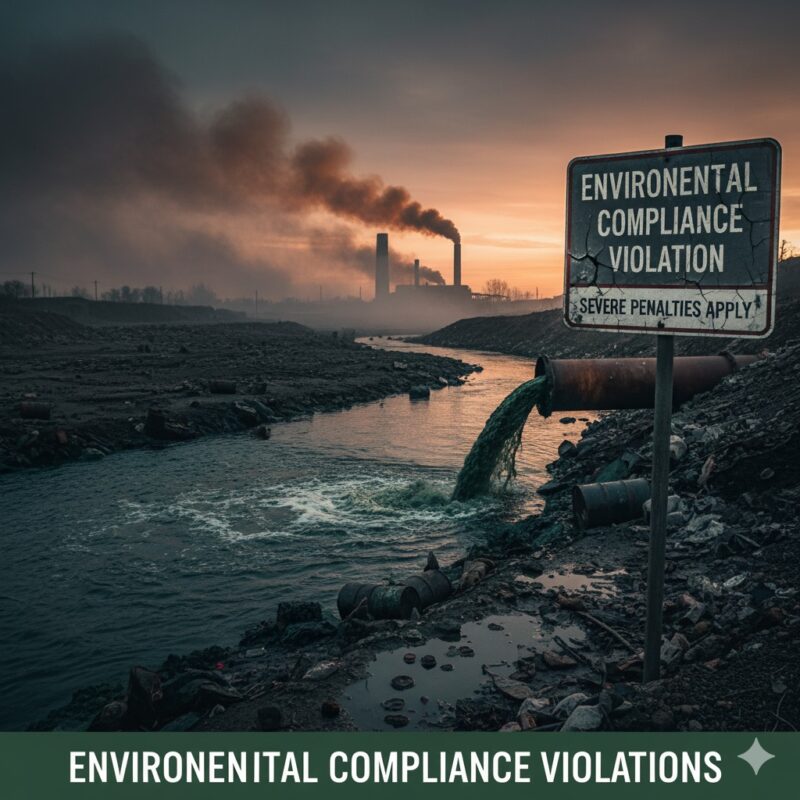
The schedule includes all violations, from storing and burning waste to negligence in transport and recycling, with financial penalties, imprisonment, and other deterrent measures, considering doubling the fine upon repeat violations. The Sustainable Resources Office ensures guiding clients on how to comply with the system and avoid environmental compliance violations through preparing periodic environmental reports and environmental management plans.
For more services we provide at the Sustainable Resources Office for Environmental Consultations:
Rehabilitation of sand borrow pits using soil stabilization technology
Rehabilitation of quarries in Saudi Arabia
Step-by-step guide to obtaining an environmental license in Saudi Arabia
Avoiding environmental compliance violations from the National Center – Your comprehensive guide
\All inquiries about the environmental permit and how to obtain it