Our Services
Periodic environmental reporting
We prepare and submit the periodic environmental reports that document your facility’s ongoing compliance to regulators and maintain an orderly record of its environmental performance.

What the service includes
- Monitoring the facility’s environmental indicators for the period
- Comparing performance against regulatory requirements
- Documenting observations and corrective actions
- Submitting the report to the authorities on time
In-depth guide
Everything you need to know
What is the Preparing a Periodic Environmental Report?
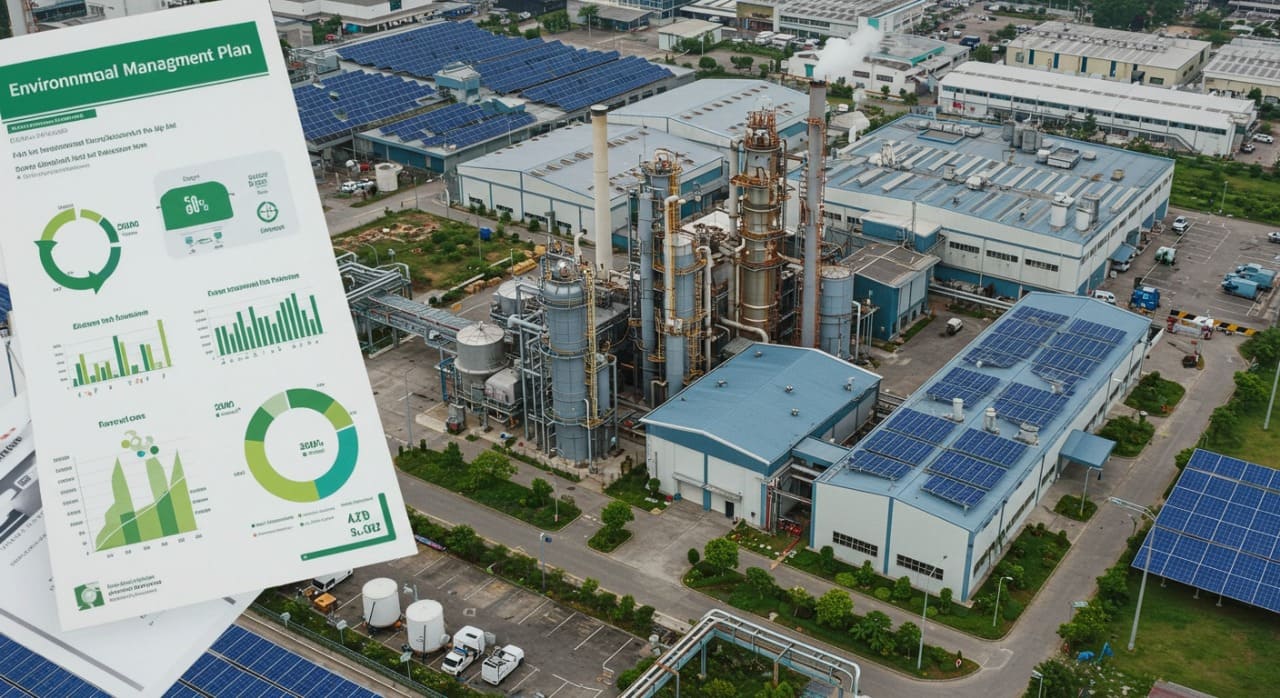
Preparing a Periodic Environmental Report is a mandatory procedure aimed at documenting the extent to which industrial, commercial, and agricultural facilities comply with the standards of the National Center for Environmental Compliance regulations and the requirements of the new environmental law in the Kingdom of Saudi Arabia. This report is an important monitoring and analytical tool that includes comprehensive data on resource consumption, emission quality, resulting waste, water and energy use, and other environmental indicators.
These reports are submitted periodically—usually annually—to competent authorities such as the NCEC, according to the facility’s classification and activity, especially facilities that fall under the Category 1 Environmental Permit, which are considered activities with the highest impact on the environment.
The periodic environmental report represents a primary link between facilities and regulatory bodies and provides a transparent ground for evaluating environmental performance and identifying improvement opportunities. It is also considered an accredited reference in the case of environmental auditing or inspection. We provide high-professional periodic environmental report preparation services at a competitive cost, ensuring full compliance with applicable rules and regulations.
How to Preparing a Periodic Environmental Report?
Preparing a periodic environmental report is one of the essential requirements imposed by NCEC regulations to ensure that facilities comply with the environmental standards set forth in the New Environmental Law. This report aims to assess the environmental performance of industrial or service facilities and ensure their compatibility with the Category 1 environmental permit or other accredited environmental permits. Here is a list of the basic steps for the content of a periodic environmental report:Collecting and analyzing the facility’s environmental data (air, water, waste, noise, etc.).Reviewing the environmental permit conditions issued to the facility and matching them with actual environmental performance.Documenting environmental monitoring operations and field measurements using accredited scientific methods.Preparing a list of all emissions or discharges resulting from operation.Evaluating the extent of compliance with NCEC regulations.Identifying any environmental violations and providing proposals for corrective actions.Writing the report in an organized format including tables, data, and illustrative diagrams when needed.Sending the report to competent authorities at specified periodic dates, according to applicable environmental systems.Keeping a copy of the report within the facility’s records for reference during environmental inspection or auditing.
How to Prepare an Environmental Impact Assessment (EIA) Report?
The Environmental Impact Assessment (EIA) report is one of the most important documents required when implementing construction or industrial projects, ensuring the project’s compatibility with the new environmental law and compliance with NCEC requirements.
This report helps competent authorities make informed environmental decisions that limit potential negative impacts on the environment. Below are the steps for preparing an EIA report:
Defining the project type and scope (location, nature, area, operational phases).
Collecting baseline environmental data about the site, such as soil, water, air, and wildlife.
Identifying potential environmental impacts (positive and negative) during implementation and operation phases.
Assessing the intensity and severity of environmental impacts using accredited scientific methodologies.
Proposing preventive and mitigation measures to address negative impacts.
Analyzing possible alternatives for the project (in terms of sites or implementation methods) and determining the most environmentally suitable.
Preparing an environmental management plan and environmental compensation in case of unavoidable damage.
Drafting the final report according to NCEC regulation models and conditions.
Reviewing the report by a certified environmental consultant to ensure compatibility with regulatory requirements.
Submitting the report to the competent authority to obtain a Category 1 or Category 2 environmental permit depending on the project’s nature.
How do I obtain an environmental permit?
To obtain an environmental permit in Saudi Arabia, contact the Sustainable Resources Office in Saudi Arabia. It is necessary to follow clear steps that ensure compliance with NCEC regulations and adherence to the new environmental law. Here is the step-by-step method to apply for an environmental permit:
Access the environmental licensing platform affiliated with the NCEC.
Create an account or log in if you already have one.
Specify the type of activity and facility to determine the required permit category (Category 1 or otherwise).
Fill out the electronic application form with all required data accurately.
Attach documents such as the EIA report or the environmental record and the environmental management plan, in addition to the commercial register.
Pay the prescribed fees electronically via the platform.
Wait for the application to be reviewed by specialists at the National Center.
Receive the environmental permit electronically after approval, or receive a notice of required modifications, if any.
What are the requirements for obtaining an environmental permit?
In order to obtain an environmental permit, there is a set of requirements that you must first fulfill to be able to obtain the permit easily. Obtaining the permit varies based on the activity classification between Category 1 and Category 2. Here is a list of the most famous requirements you need to fulfill to obtain the permit:
Submitting the commercial register or municipal license for the facility.
Preparing an Environmental Impact Assessment report or the environmental record for industrial facilities according to activity category.
Attaching an operational environmental management plan to clarify preventive and mitigation measures.
Clarifying the type of industrial or service activity of the facility.
Determining the facility’s location and its precise geographic coordinates.
Submitting a study on the activity’s impact on the surrounding environment.
Complying with NCEC requirements.
Committing to have an accredited environmental consulting office to prepare required studies.
Paying the environmental fees approved by competent authorities.
Uploading all documents via the electronic environmental permit platform.
What are the environmental violations in Saudi Arabia?
Environmental violations are among the most prominent challenges facing environmental protection efforts and the achievement of sustainable development, as they involve a violation of the systems and regulations approved by regulatory bodies such as the NCEC, and negatively affect public health and ecosystems.
These violations vary according to the type of activity and the extent to which facilities commit to preparing a periodic environmental report and obtaining a Category 1 environmental permit or other categories as required by the new environmental law regulations. Below are the most prominent types of environmental violations:
Practicing industrial or operational activities without obtaining an environmental permit.
Failure to prepare a periodic environmental report or submitting it after the specified deadlines.
Exceeding the maximum limits for pollutant emissions (gaseous, liquid, or solid).
Disposing of hazardous waste in non-compliant ways.
Failure to comply with approved emergency and environmental response plans.
Causing soil or groundwater pollution due to industrial leaks.
Operating facilities within protected or environmentally prohibited areas without a special license.
Non-compliance with the conditions of NCEC regulations.
Encroaching on wildlife or harming protected organisms.
Neglecting the use of control systems and eco-friendly technologies.
Transporting or storing chemicals in a way that violates environmental safety requirements.
You may also find useful

Other services

National Waste Management Center permits

Environmental permitting

Environmental Impact Assessment (EIA) studies

Environmental Management Plan (EMP) development

Environmental register development & management

Current environmental status assessment

Comprehensive environmental remediation